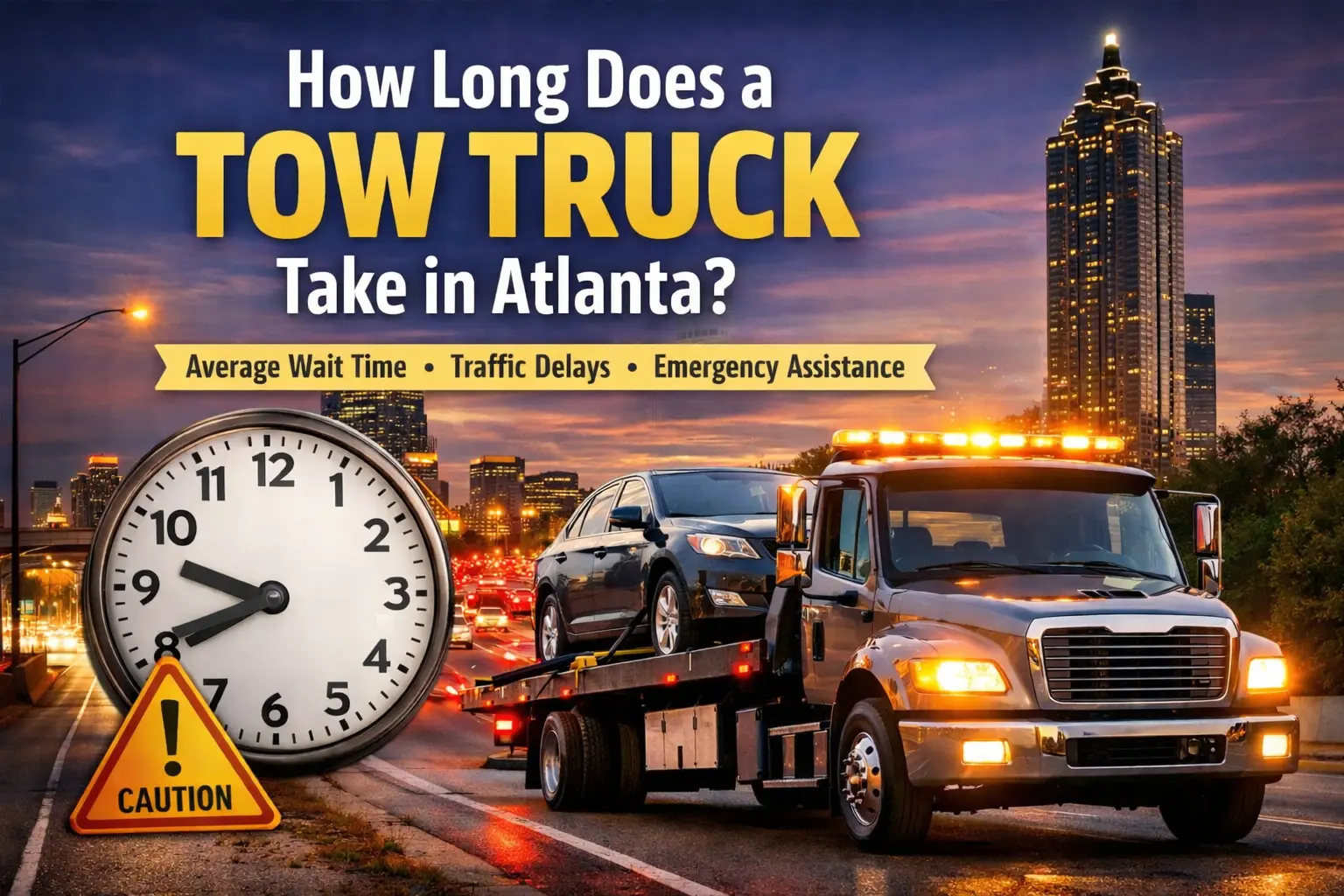
In Atlanta, a tow truck typically takes between 30 and 60 minutes to arrive at a caller’s location. This estimate fluctuates based on the time of day, current traffic conditions, and the specific area within the metropolitan region. During peak rush hour or severe weather, wait times can extend to 90 minutes or more due to heavy congestion on major arteries like I-285 and I-75.
This guide provides a detailed look at the variables that influence response times for towing services in Atlanta and what drivers can expect when they require roadside assistance. ALTA RUNS TOWING provides this information based on years of experience managing vehicle recoveries throughout the diverse neighborhoods and highways of Georgia’s capital. Understanding these factors helps drivers stay safe and manage expectations during a breakdown.
Variables that dictate response times
The time it takes for a tow truck in Atlanta, GA, to reach a destination depends on several external factors. Traffic is the most significant hurdle. Data from the 2023 INRIX Traffic Scorecard indicates that Atlanta consistently ranks among the most congested cities in the world. When highways are at a standstill, tow trucks must navigate the same gridlock as every other vehicle, unless they are already positioned nearby.
The weather also plays a major role. Rain or unexpected ice causes a spike in accidents across the city. During these periods, the demand for emergency towing in Atlanta increases rapidly. When more drivers need help simultaneously, the available fleet of trucks is stretched thin, leading to longer wait times.
The type of vehicle requiring assistance matters too. A standard passenger car can usually be handled by a common wheel-lift or flatbed truck. However, larger vehicles or those stuck in difficult spots, like a parking garage with low clearance, require specialized equipment. Dispatching a heavy-duty truck or a low-profile recovery vehicle might take longer because these units are fewer in number.
Geographic location impacts arrival
Atlanta is a sprawling city with distinct zones. Each area presents different challenges for a towing company in Atlanta.
- The Downtown and Midtown Core: High pedestrian traffic and frequent construction projects can slow down trucks. While the distance might be short, the stop-and-go nature of city streets adds minutes to the arrival time.
- The Perimeter (I-285): This loop is notorious for accidents. If a breakdown occurs near a major interchange like Spaghetti Junction, the truck might have to take a long detour to reach the correct side of the highway.
- Buckhead: Residential traffic and narrow streets can complicate access for larger recovery vehicles.
- Hartsfield-Jackson Area: Extremely high traffic volumes near the airport necessitate strategic routing to reach stranded motorists.
- Suburban Areas: Locations like Marietta, Alpharetta, or Decatur often have better flow on local roads, but the physical distance from a dispatch center might be greater.
Response time estimates by region
The following table outlines estimated wait times based on different parts of the city during normal conditions.
| Region of Atlanta | Estimated Wait Time | Common Delay Factor |
|---|---|---|
| Downtown / Midtown | 35 to 55 Minutes | Heavy foot traffic and signals |
| I-285 Perimeter | 30 to 60 Minutes | Major highway accidents |
| Buckhead | 40 to 70 Minutes | Narrow residential streets |
| Hartsfield-Jackson Area | 25 to 45 Minutes | High volume of airport traffic |
| Outer Suburbs | 40 to 80 Minutes | Travel distance from dispatch |
Things to consider before making a decision
Once you have assessed your immediate situation, there are several steps you can take to streamline the recovery process. Before calling for car towing in Atlanta, drivers should evaluate several factors to ensure they get the right help quickly. The first priority is safety. According to the Georgia Department of Transportation, drivers should move their vehicles off the travel lanes if possible. This is part of the “Move Over” law requirements, which help protect both the driver and the responder.
Check if your insurance policy or vehicle warranty includes roadside assistance. Some programs require you to use specific providers, while others allow you to choose any towing services in Atlanta, Georgia, and seek reimbursement. Knowing this beforehand prevents confusion during the dispatch process.
Be prepared to describe the exact condition of the vehicle. Is the car stuck in “Park”? Are the wheels straight? Is it an all-wheel-drive vehicle? ALTA RUNS TOWING utilizes this information to send the correct equipment the first time, preventing a second trip and more waiting. Providing a precise location via a GPS pin drop is much more effective than describing landmarks, especially at night or in unfamiliar areas.
Bonus Tip: If you are on a major highway, look for the nearest mile marker or exit sign. This helps dispatchers find you much faster than a general street name.
Factors that speed up or slow down the process
The mechanical state of the vehicle changes the complexity of the job. A vehicle with a simple flat tire or a dead battery might be serviced faster than one involved in a collision where the wheels are locked. If a vehicle is in a ditch or down an embankment, a winch-out service is necessary, which requires significantly more time for setup and recovery.
Availability of information is another critical factor. When a driver can clearly state their vehicle make, model, and the specific nature of the problem, the dispatcher can bypass several clarifying questions. This allows the driver to be placed in the dispatch queue immediately.
Equipment requirements for different vehicles
Not every tow truck is suitable for every car. Most modern luxury vehicles and SUVs with all-wheel drive must be transported on a flatbed to avoid damaging the transmission. If a caller does not specify that their vehicle is all-wheel drive, a towing company in Atlanta might send a standard wheel-lift truck. Upon arrival, the operator will realize the mistake, and a new truck will have to be dispatched, doubling the wait time.
Bonus Tip: Always mention if your car has been lowered or has aftermarket body kits. These require special ramps or wooden blocks to load without causing damage.
Common questions about towing wait times
People often ask why a truck that is “five miles away” takes 40 minutes to arrive. In Atlanta, five miles can represent a 30-minute drive during the afternoon rush. Additionally, the nearest truck might be finishing another job. Towing companies operate on a fluid schedule where drivers move from one call to the next.
Another frequent question involves the cost versus the speed. Sometimes, a more expensive service might have more trucks on the road, leading to a faster response. However, a local vehicle towing service in Atlanta often has better knowledge of side streets and shortcuts to bypass highway congestion.
Understanding dispatch priorities
Towing companies often prioritize calls based on safety. A vehicle stranded in the middle of a live lane of traffic on I-75 is a higher priority than a car sitting safely in a residential driveway. Police-ordered tows at accident scenes also take precedence because they are necessary to clear the road for public safety.
Frequently asked questions
Does the time of day change the price of towing?
Most companies have a standard base rate and a per-mile charge. However, many apply a “night and weekend” or “after-hours” fee. This covers the higher cost of labor during these times. It is best to ask about the total fee structure during the initial phone call.
Can a tow truck pick up more than one passenger?
Most tow truck cabs only have room for one or two passengers. If you have a larger group, you will need to arrange a separate ride, such as a taxi or rideshare service, to reach your destination.
What should I do while waiting for the truck?
Stay inside your vehicle with the doors locked if you are on a busy road. If the car is in a dangerous spot and you can safely exit to a spot behind a guardrail or up an embankment, do so. Turn on your hazard lights to make the vehicle visible to other drivers and the towing operator.
How can I verify the tow truck is the one I called?
When the truck arrives, check for the company name on the side of the vehicle. The driver should also be able to confirm your name and the destination you provided to the dispatcher. Professional services like ALTA RUNS TOWING ensure their drivers are clearly identified for your safety.
Is towing available on Atlanta holidays?
Yes, towing is generally a 24-hour, 365-day service. However, expect longer wait times on major holidays like July 4th or New Year’s Eve when road volume is high, and staff may be limited.
Evaluating your towing needs
When a breakdown happens, the focus should be on clear communication and safety. While the average wait time in Atlanta sits around 45 minutes, being prepared with your location and vehicle details can help reduce this duration. Every situation is unique, so assessing your surroundings and the specific needs of your car is the first step toward a successful recovery.
Drivers should look for companies that demonstrate transparency about their arrival times and equipment. Avoid making decisions based solely on the fastest promised time, as some services may overpromise during busy hours. Instead, choose a provider with a reputation for reliability and clear communication.
Contact professional assistance
When you need a reliable towing service in Atlanta, getting professional help is a phone call away. ALTA RUNS TOWING offers dedicated support for various roadside needs across the metro area. Whether you require emergency towing in Atlanta or standard vehicle transport, the team is ready to assist. You can reach ALTA RUNS TOWING by calling (470) 684-2913 or by sending an email to tobb1018@gmail.com for non-urgent inquiries.
Sources
- INRIX – INRIX
- National Highway Traffic Safety Administration – National Highway Traffic Safety Administration